
Household Chores Statistics: Which Chores Do Brits Find Most (And Least) Attractive?

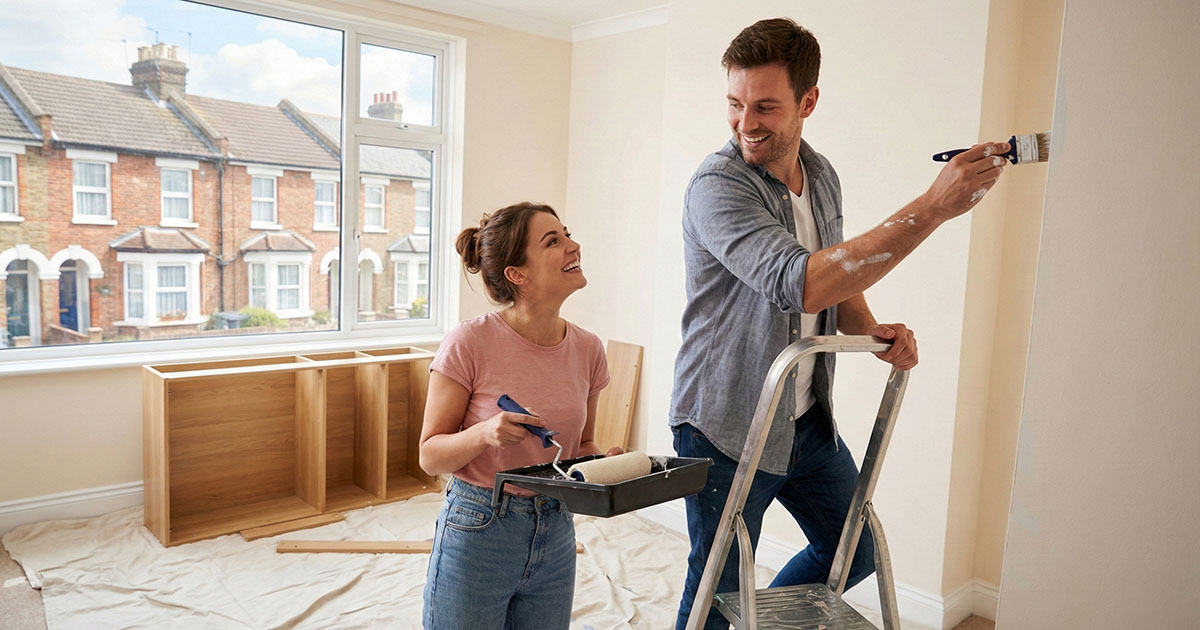
Every relationship has two sides: the highlight reel of nights out and long weekends… and the quieter reality of overflowing bins, streaky recycling tubs, and half-finished flatpack furniture lurking in the corner. It begs a surprisingly honest question: do household chores spark attraction - or suffocate it?
To find out, we conducted a household chores survey of a demographically representative sample of 2,000 UK adults using the market research company Censuswide. We asked participants:
“How sexually attractive or unattractive do/would you find your/a partner, when/if they do/did the following household chores? If you don't have a partner, imagine you have.”
We asked respondents to rate each chore on a sliding scale as part of our chore attractiveness measure, choosing from: “very sexually attractive”, “somewhat sexually attractive”, “neutral”, “somewhat sexually unattractive”, “very sexually unattractive”, or “prefer not to say”. Using these responses across all ten chores allowed us to calculate clear net attraction and unattractive scores, revealing which tasks lift partner appeal and which lower it.
The results revealed some surprising insights into how everyday household jobs can affect partner appeal across the UK.
UK Chore Statistics Overview
- Hands-on repairs are Britain’s biggest turn-on, with 36.2% saying a partner becomes more attractive when they fix something around the house.
- Women respond strongest to practical effort – 40.5% find home repairs attractive, followed closely by DIY and flatpack assembly at 39.5%.
- Men rate painting and redecorating highest, with 34.3% saying it boosts their partner’s appeal.
- Rinsing recycling is the nation’s biggest “ick” among home duties (19.20%) – yet outsourcing the job is rated even lower at just 18.7%, making it the least attractive behaviour in the study.
- Adults aged 25–34 are the most chore-smitten, with DIY peaking at 54.4%.
- London is the UK’s choreplay capital, posting some of the highest attraction scores across multiple tasks – with both painting and DIY coming in at 40.3%.
- Brighton is the nation’s tip-run hotspot, with 33.3% saying a partner becomes more attractive when they take rubbish to the dump.
Which Chores Are Most Attractive to Brits – and Which Are Least?
Attraction doesn’t just come from big moments – it often shows up in the everyday jobs happening around the home. When we asked Brits which chores make a partner more appealing, clear favourites emerged, with some tasks giving people a noticeable boost and others barely making an impact at all.
Our findings reveal that:
- The most attractive chores are hands-on tasks, with fixing things (36.2%), painting (36.1%) and DIY/flatpack assembly (36%) leading the way – practical jobs that consistently rate highest.
- The least appealing options sit firmly at the bottom, including rinsing recycling (19.2%) and getting someone else to do the job (18.7%), which score lower than every chore in the study.
In this survey, around half of respondents consistently choose “Neutral”. Based on the averages across all ten chore categories, the overall breakdown is: Neutral – 52.20% and prefer not to say – 6.61%. So when we report that “30% find a chore sexually attractive”, it simply means the majority sit in the neutral or no-opinion group - not that the other 70% find it unattractive.
Which age groups are most likely to find their partner more attractive when they do household chores?
Attraction doesn’t land the same way for everyone – different age groups respond very differently to seeing a partner clean, fix or organise things at home. The results reveal some striking generational differences:
- Adults aged 25–34 are the most likely to find their partner more attractive when they do household chores, with an average appeal of 46% – the highest of any age group.
- 16–24s follow with an overall average of 38%, showing strong attraction responses, especially to hands-on tasks.
- 35–44s sit mid-table, averaging 36%, noticeably lower than younger adults.
- 45–54s show a clear drop, averaging 24%, indicating chores trigger far less attraction in midlife.
- 55+ record the lowest attraction levels, averaging 18% overall – the lowest of any age bracket in the study.
How each age group responds to individual household chores
Not all age groups react to household chores in the same way. Some tasks make a partner noticeably more appealing for younger adults, while older age groups show much weaker responses. Here’s how attraction shifts across generations:
| Age Group | Most Attractive Chore | % | Least Attractive Chore | % |
|---|---|---|---|---|
| 16-24 | Fixing jobs | 53.26% | Rinsing recycling | 22.22% |
| 25-34 | DIY / flatpacks | 54.43% | Outsourcing | 35.17% |
| 35-44 | Fixing jobs | 44.86% | Rinsing recycling | 23.99% |
| 45-54 | Painting / redecorating | 34.82% | Outsourcing | 15.34% |
| 55+ | DIY / fixing chores | 21.47% | Outsourcing | 7.46% |
- Among 16–24s, fixing jobs makes the biggest difference to how attractive they find a partner, with 53.3% rating it positively. Rinsing recycling makes the smallest impact for this group at 22.2%.
- For 25–34s, a partner doing DIY or flatpacks is the strongest attraction booster, scoring 54.4%, while outsourcing the task is the least appealing at 35.2%.
- Adults aged 35–44 respond most to a partner fixing things around the home, at 45%, with rinsing recycling again placing lowest at 24%.
- Those aged 45–54 are most drawn to a partner who paints or redecorates, at 34.8%, while outsourcing shows the weakest effect at 15.3%.
- Adults aged 55+ show their strongest attraction response to DIY and fixing chores, at 21.5%, while outsourcing ranks lowest at just 7.5% — the smallest score of any age group in the study.
What men and women actually find attractive in a partner’s chores
The data shows clear — and surprisingly consistent — patterns in what each gender finds appealing when it comes to household jobs.
What women find most attractive in men
Women respond strongest to practical competence and hands-on effort. Their top turn-ons are:
For women, attraction rises when a partner is capable, proactive and willing to take on physical or problem-solving tasks — the kinds of jobs that keep a home functioning smoothly.
What men find most attractive in women
Men’s preferences lean more towards creative, expressive and space-elevating chores. Their top three are:
These results suggest men respond to visible transformation — someone improving the home, refreshing a space, or bringing aesthetic flair and care to shared surroundings.
Where men and women agree
Men and women share similar feelings about two key behaviours:
- Taking the bins out — Women 21.1% / Men 22.6%
This is the most evenly matched response in the entire study. It doesn’t dramatically boost attraction for either gender, but both register a small lift — a sign that even simple contributions count. - Outsourcing the chore — Women 17.3% / Men 20.1%
This is the least attractive behaviour for both genders. Handing the job to someone else consistently lowers appeal, reinforcing that what matters most is effort and willingness, not perfection.
Which household chores are viewed as the most and least attractive across different UK cities?
Different cities respond very differently to ‘chore appeal’. Some love hands-on DIY and fixing things; others barely react to any household task at all.
| City | Most Attractive Chore | % | Least Attractive Chore | % |
|---|---|---|---|---|
| Belfast | Fixing something around the house | 42.86% | Rinsing recycling | 16.07% |
| Birmingham | Fixing something around the house | 34.33% | Rinsing recycling | 13.43% |
| Brighton | DIY / assembling flatpacks | 43.14% | Rinsing recycling | 21.59% |
| Bristol | Fixing something around the house | 40.00% | Outsourcing the chore | 12.63% |
| Cardiff | DIY / assembling flatpacks | 33.80% | Rinsing recycling | 16.90% |
| Edinburgh | Fixing something around the house | 32.47% | Outsourcing the chore | 16.88% |
| Glasgow | Fixing something around the house | 36.78% | Rinsing recycling | 18.39% |
| Leeds | Fixing something around the house | 33.62% | Outsourcing the chore | 11.30% |
| Liverpool | Painting / decorating | 29.73% | Outsourcing the chore | 13.51% |
| London | Painting / decorating & DIY (TIE) | 40.29% | Rinsing recycling | 23.99% |
| Manchester | Fixing something around the house | 40.11% | Rinsing recycling | 25.42% |
| Newcastle | DIY / assembling flatpacks | 33.73% | Rinsing recycling | 19.28% |
| Norwich | Painting / decorating | 38.03% | Outsourcing the chore | 9.86% |
| Nottingham | Painting / decorating | 31.91% | Rinsing recycling | 22.34% |
| Plymouth | Painting / decorating | 35.56% | Rinsing recycling | 11.11% |
| Sheffield | Fixing something around the house | 37.88% | Rinsing recycling | 13.64% |
| Southampton | Painting / decorating | 32.22% | Rinsing recycling | 12.22% |
- Fixing something is the most attractive chore in the majority of UK cities, including Belfast (42.9%), Birmingham (34.3%), Bristol (40.00%), Edinburgh (32.5%), Glasgow (36.8%), Leeds (33.6%), Manchester (40.1%) and Sheffield (37.9%).
- DIY and flatpack assembly comes out on top in several creative coastal cities, including Brighton (43.1%), Cardiff (33.8%) and Newcastle (33.7%).
- Painting and decorating dominates in a wide spread of cities, leading in London (40.3%), Norwich (38%), Plymouth (35.6%), Southampton (32.2%), Liverpool (29.7%) and Nottingham (31.9%).
- Rinsing recycling is the least attractive chore in most regions, scoring as low as 11.1% in Plymouth, 13.4% in Birmingham, 13.6% in Sheffield, 16% in Belfast, 18.4% in Glasgow, 19.3% in Newcastle and 24% in London — making it the strongest UK-wide “ick”.
- Getting someone else to do the job (outsourcing) consistently ranks among the least attractive options, with especially low appeal in Norwich (9.9%), Leeds (11.3%), Bristol (12.6%), Liverpool (13.5%) and Edinburgh (16.9%).
- The cities most attracted to hands-on effort overall include London, Manchester, Brighton, Belfast and Sheffield, all posting high scores across their top-ranking practical chores.
Which UK Cities Are Most Turned on by Household Chores?
Top 3 Choreplay cities in the UK
1. London appears in the top three results for almost every chore category, with no other city showing this level of consistency. Londoners record the highest increases in attraction when their partners perform household chores.
- Painting / decorating: 40.3% Attractive
- DIY / flatpacks: 40.2%
- Fixing something around the house: 38.6%
- Cleaning / maintaining the car: 37%
- Mowing the lawn: 35.6%
- Clearing unused items: 30.6%
- Going to the tip: 28%
- Taking the bins out: 27.1%
2. Manchester scored second most elevated attraction levels when it comes to chores:
- Fixing something: 40.1%
- Painting or redecorating a room: 39.6%
- DIY: 37.9%
- Car cleaning: 33.3%
- Outsourcing chores: 27.7% (highest city score in this category)
3. Bristol shows consistently strong attraction levels for practical household chores, with Bristolians repeatedly scoring in the mid-30s across key tasks.
- Fixing something around the house: 40%
- DIY: 37.9%
- Painting or redecorating a room: 35.8%
- Mowing the lawn: 26.3%
- Cleaning or maintaining the car: 25.3%
Cities Most Turned Off by Choreplay
A few UK cities show noticeably low attraction levels toward “choreplay”, with scores sitting well below the national average:
- Cardiff posts the weakest response overall, with attraction clustering around 14–17%. Lowest scores include: taking the bins out (14%), going to the tip (14%), clearing unused items (15.5%), rinsing recycling (16.9%).
- Edinburgh follows closely with consistently flat, low-mid scores: taking the bins out (15.6%), going to the tip (15.6%), rinsing recycling (16.9%), clearing unused items (18.2%).
- Glasgow sits in the same low-performing zone, though slightly higher overall: outsourcing chores (12.6%), clearing unused items (17.2%), rinsing recycling (18.4%), going to the tip (19.5%).
Which household chore is rated the least attractive across UK cities?
This category - “when a partner gets someone else to do it (cleaner, waste removal service, etc.)” - is officially the least sexy behaviour in the entire study. It scores just 18.7% Attractive (Net) across the UK, making it the only task where outsourcing actually reduces attraction compared with every home chore measured.
- Plymouth ranks dead last for outsourcing, with attraction levels sinking below 9% — the lowest score nationwide. Hiring help is basically the opposite of a turn-on there.
- Manchester sits at the other extreme. Mancunians are the most open to outsourcing in the UK, with a 28% attraction score. They’re more likely than anyone else to call in help.
Mancunians already have the bee — city-emblem of hard work; but this study suggests Plymouth deserves to borrow it as no other city is more determined to do every household job themselves:
More Household Chores & Attraction Facts and Figures 2025
Here’s how wider research links household labour with attraction, satisfaction and dating trends across the UK and internationally.
Who Does the Chores?
- 63% of women say they do more household labour than men. (NatCen Gender Roles Study, 2023)
- Women carry out 60% more unpaid work — including laundry, cleaning and childcare — than men. (ONS Analysis, 2016)
- Less than a third of couples share housework equally — and those who do share the load report the highest marital and sexual satisfaction. (Council on Contemporary Families, 2018)
- The same study found that some tasks have a bigger impact on relationship quality than others — for example, men who share the shopping chores report higher satisfaction than men who do the majority of shopping. (Council on Contemporary Families, 2018)
- Men are more likely to complete outdoor chores — 12× more likely to handle car maintenance (74% male vs 6% female) and twice as likely to take on gardening (47% vs 20%). (Starling Bank Report, 2023)
- Men and women differ sharply on which chores they enjoy: 24% of men enjoy taking the bins out, compared with just 9% of women. (YouGov, 2023)
- Almost two-thirds of Brits say sharing household chores is important in a relationship. (YouGov Life & Times Report, 2015)
How Much Do Household Chores Really Contribute to Relationship Conflict?
- 35% of Brits say the most annoying habit in a partner is “avoiding household tasks”. (Hammonds Survey, 2023)
- 1 in 6 Brits say they would end a relationship because of arguments about household chores. (Metro, 2023)
- The most argued-about chores are: Tidying up (54.4%), washing up (35.1%), cleaning the toilet (29.8%), and taking out the bins (28.9%). (Tapi Survey, 2024)
- 32% of couples argue weekly about recycling; 18% argue about rubbish disposal, especially putting items in the wrong bin. (Express, 2023)
- When chores aren’t shared equally, couples have 5+ arguments a month, rising to 8 per month when one person carries the bulk of the work. (Starling Bank Research, 2023)
- Household chores are cited in one-third of UK divorces. (Express, 2012)
- A Harvard Business School–linked review found that chores are the third leading reason for divorce, with 35% of couples drifting apart over domestic disputes. (Sparkman Law Firm Summary, 2024)
- Skills matter too: singles aged 18–44 say the ability to do household chores (91%), laundry (82%) and dishes (81%) are top qualities in a potential partner. (Whirlpool Survey, 2024)
- “Not doing a fair share of chores” was the 4th most common household argument, and “squeezing rubbish into a full bin” ranked 7th. (Cushelle Household Arguments Survey, 2023)
Attraction and Chores: What External Studies Show Globally?
- A third of Americans say a messy partner is “less attractive”. (Yahoo Lifestyle Survey, 2024)
- More than half of US adults are turned on by their partner doing chores. (Homeaglow Survey, 2024)
- An Australian study found women had greater relationship satisfaction when men took on an equal share of chores — supporting our UK finding that women consistently rate DIY, fixing and maintenance tasks as most attractive. (Daily Mail Science, 2022)
Choremancing: everyday chores are becoming part of dating culture
- 42% of single people now combine dates with everyday tasks — cooking, shopping, dog walking — in a trend known as Choremancing. (Plenty of Fish Dating Survey, 2023)
- A LoveHoney survey found 29% of Brits think about household chores during intimacy, highlighting the mental load’s influence on desire. (LoveHoney Survey, 2024)
Final Wrap-Up: What Choreplay Says About UK Households - and How HIPPO Fits In?
From fixing furniture to taking the bins out, this study shows one thing clearly: the effort you put into looking after your home genuinely shapes how attractive your partner finds you.
Practical, hands-on chores like fixing things, DIY, painting and even the occasional tip run consistently rank the highest. They signal contribution, care and teamwork. Maybe something to think about when Valentine's Day, birthday or Christmas is approaching; what can you do around the house that shows your commitment to your partner?
And when all that hands-on effort leaves behind clutter, old items or DIY waste, that’s where HIPPO can quietly take the pressure off. HIPPOBAGs make it easier to clear out what’s no longer needed without taking away from the personal effort that makes a home feel cared for. If you’re planning to declutter, refresh a room, or a bigger tidy-up, our household removal services can help you handle the last bit with ease. For anyone focused on greener habits at home, our sustainability commitments show exactly how we’re working to cut waste and support responsible choices - get in touch with our friendly team!
Methodology: The survey was commissioned by waste removal company HIPPO and conducted by market research company Censuswide, polling a nationally representative sample of 2,000 UK adults. The data was collected between 29.10.2025-31.10.2025.