
Are Landlords Responsible for Tenants’ Rubbish?

Has your tenant left rubbish behind: how much of an issue is this for you? Your situation may fall somewhere between ‘someone threw rubbish into my skip’ and ‘a tradesman left equipment inside my home’. You can’t immediately take it to the tip like you can with your own rubbish, and you can’t move it, sell it or throw it away without encountering legal trouble.
The good news is that you’re not out of options. It might feel overwhelming, stressful and more than a bit frustrating to be saddled with rubbish that isn’t yours, but UK law accounts for tenant negligence in situations like this. It’s important to do your research before you act, but you won’t be stuck with someone else’s discarded items forever.
What is a Landlord Responsible for with Tenants Waste?
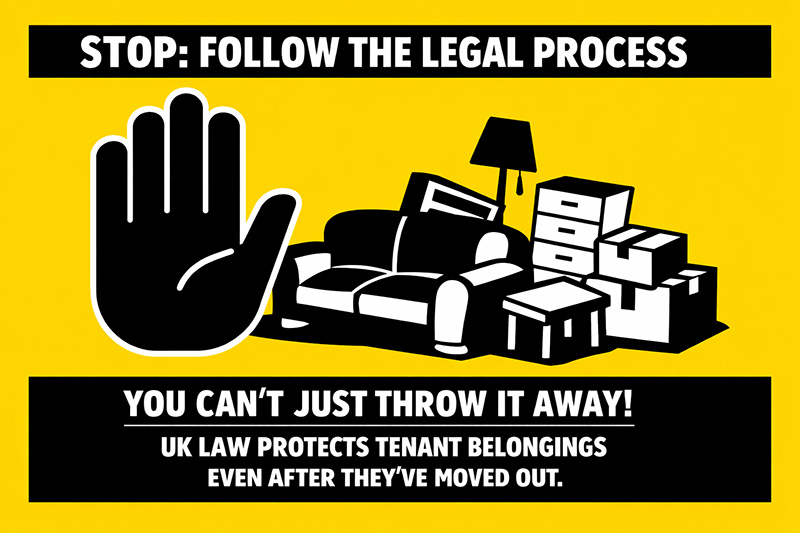
When it comes to rubbish disposal, you have set responsibilities as a landlord. You’re responsible for providing proper waste disposal facilities and ensuring they’re being used correctly, as well as allowing adequate time after serving an eviction notice for your tenant to remove their things. It’s incredibly important to understand what your responsibilities are, especially if you’ve been left with someone else’s rubbish.
Facilitating waste disposal: You’re legally required to provide the means for your tenants to manage their own waste. That includes regular waste bins, recycling bins and food bins. Tenants are allowed to use council collection services and HWRCs, and the standard 4-bin setup is acceptable for most waste disposal requirements.
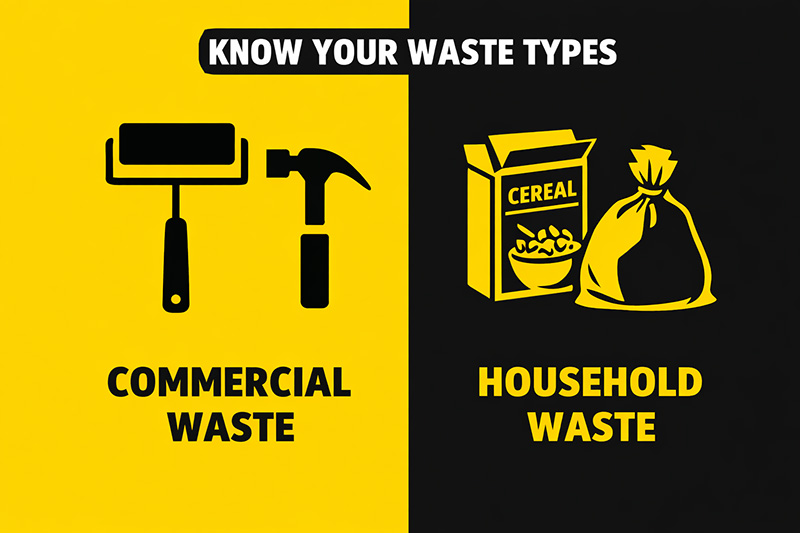
Differentiating waste types: As a landlord, you’re running a property business. Any rubbish that you produce through maintenance, hired cleaning and decorating is considered commercial waste and cannot be disposed of alongside your tenants’ rubbish. Meanwhile, your renters are producing household waste, which can be put into regular council bins.
Communicating with tenants: If a tenant has left rubbish or personal items in your property, your first port of call must be communication. You can be charged for throwing away anything that belongs to your tenant without following (and documenting) the proper procedure, which involves notifying the renter and giving them time to pick up their things. Removing a tenant’s belongings without notice or permission, and without following the correct legal process, can expose landlords to legal action.
What Waste Disposal is a Tenant Responsible For?
Despite holding plenty of responsibilities, landlords aren’t the only ones on the hook when it comes to waste. Tenants are expected to dispose of rubbish safely and legally, and it’s considered bad form to leave waste in a property you’re vacating. Here are a few things you should be doing as a tenant to dispose of your rubbish in a safe and eco-friendly way.
Separating your rubbish: If you want to be as sustainable as possible, you’ll need to separate your rubbish into waste types. These include paper, recyclables, food waste and general waste. Correctly sorted bins help to keep waste workers safe from biohazards and allow waste disposal companies to recycle as much of your rubbish as possible.
Proper waste management: If your bins are overflowing, it can be easy to leave bags next to them instead. This can contaminate the environment with microplastics, and chemicals produced by degradation, and it’s ill-advised for human health as well. And furthermore, this can also be considered as fly-tipping. Take advantage of Household Waste Recycling Centres if your bins are overflowing and take steps to avoid allowing rubbish to pollute your surroundings.
Leaving nothing behind: Just like landlords can be charged for disposing of your belongings, you can get into trouble for abandoning items at their property. This is mostly the case for rubbish, since it can be classified as fly tipping if you leave out-of-place bin bags across the property. Taking your belongings with you is the only way to ensure that they’re safe - you can’t insure them or keep an eye on them if you don’t.
Can a Landlord Dispose of a Tenant’s Belongings?
A landlord cannot immediately dispose of a tenant’s belongings. Doing so without following the correct legal process may be unlawful. However, landlords can dispose of abandoned items after serving notice and allowing the tenant reasonable time to collect them. This process is governed by Torts (Interference with Goods) Act 1977, which requires landlords to give formal notice and take reasonable care of abandoned goods.
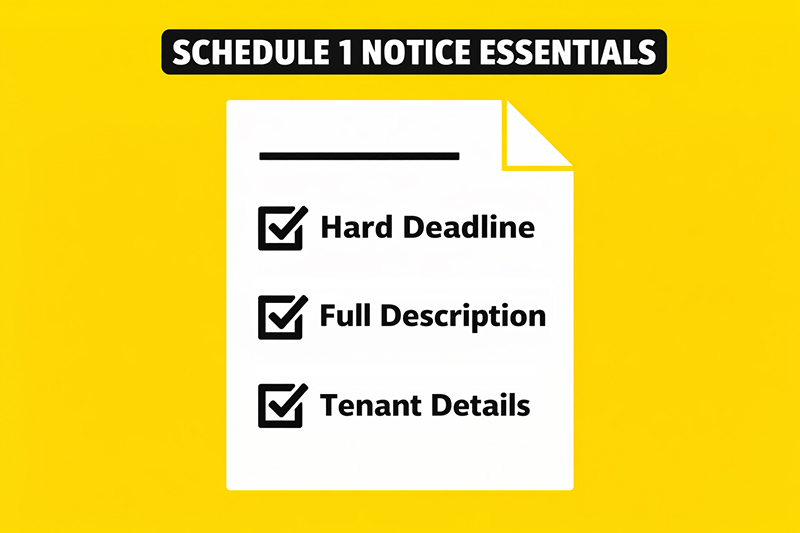
Issue a Schedule 1 notice: A Schedule 1 notice is your first step towards a clean and empty house. This is a legal document that outlines everything your tenant left behind, alongside a hard deadline for them to collect their belongings by. As long as you can prove that you’ve delivered a Schedule 1 notice and waited the appropriate period of time, your position will be defensible if your tenant complains about the removal of their items.
Make reasonable contact attempts: You can’t just drop off a note and leave it at that; your ex-tenant may still have grounds to complain that they weren’t informed. Keep in contact with them, send reminders, and allow them to schedule a pick-up or delivery with you. If your tenant is uncontactable, ensure that you’re using all contact information made available to you. If you still can’t get through, you should document your attempts to do so.
Prevent damage or decay: A landlord may move or remove a tenant’s belongings only for safe storage, not for disposal or sale, and only after serving notice and documenting the condition and location of the items. While the items are in your care, it’s your responsibility to avoid unnecessary wear and tear. That includes bringing items inside or moving them into a secure room or a storage locker. You will be liable if they become lost or damaged.
How to Give Notice to Remove Items from Your Property
A Schedule 1 notice has a strict structure that you’ll need to follow. According to Tort law, it needs to include a deadline, a full description of the items left behind and the name and address of the tenant it’s being served to. You can’t write a simple email; it’s far better to use a notice template or hire a solicitor to handle the process for you.
How Long Does a Tenant Have to Remove Belongings After Eviction?

The law does not specify a timeframe and in most cases, tenants are given around 21 days to collect their belongings after a Schedule 1 notice is served. It is advised to give a longer notice if the property is of high value. If that period has passed, the landlord is free to sell or dispose of the items as necessary. It’s still important to document everything that happens to them, however, in case you need to defend your decision in court. Documentation is always necessary when handling other people’s belongings.
Need Help with Tenant Waste Removal?
Dealing with a tenant's abandoned rubbish is stressful enough without having to sort through legal procedures and waste disposal regulations. That's where HIPPO comes in. We understand that landlords face unique challenges when it comes to waste disposal – especially when it involves furniture removal – and we're here to make the process as straightforward as possible. Whether you're dealing with a few bin bags of general waste or an entire house clearance, our team can handle it all.
Note:
The information provided in this article is for general guidance only and is not intended to constitute legal advice. While we aim to keep the content accurate and up to date, landlord and tenant responsibilities can vary depending on individual circumstances and changes in UK law.
Nothing in this article should be relied upon as a substitute for professional legal advice. If you are dealing with a specific dispute, eviction, or abandoned tenant belongings, you should seek advice from a qualified solicitor, local authority, or relevant professional body before taking action.
HIPPO accepts no liability for any loss, damage, or legal consequences arising from reliance on the information contained in this article.